Adding a Patients value of benefits that you got from checking their eligibility is what determines if we lose money on a visit, or collect the proper amount. Because a lot of visits are telehealth, we do not have much interaction with the Patient and therefore need to account for these things properly.
📚Resources Needed
- besa EHR
- Insurance Eligibility Check
🚀 Tips & Tricks
- Go through each one of the Insurance Eligibility Check articles. If you do not have a good grasp on this, you will have an issue with this. You need to understand this!
- If something with the insurance doesn’t make sense, call the Patient to confirm.
- Here is a great video to better understand the difference between Copay, Coinsurance, Deductible, etc.
- Here are the main actions your doing:
- Searching insurance eligibility
- Understanding what the Patient responsibility
- Updating Patient demographics
-
Addressing any possible hiccups
💰 Patient Responsibility Matrix
| Insurance Type / Scenario | Typical Patient Responsibility | When to Collect | How to Collect Safely (Front Desk Guidance) | Notes & Best Practices |
| 1. Standard PPO/Commercial Plan – Copay Only | Fixed copay (e.g., $20–$40 per visit) | At check-in | Collect full copay amount as listed on insurance card. Post to “patient payment.” | Confirm visit type matches copay benefit (routine or primary care). No additional collection unless procedures/labs done. |
| 2. PPO Plan – Copay + Deductible (mixed benefit) | Copay for office visit plus deductible/coinsurance for add-on services | Copay at check-in, remainder after EOB | Collect copay upfront. If performing extra services (labs, injections), note that additional costs may apply once insurance processes. | Never double-collect copay and deductible for the same base visit. Deductible applies only to the extra codes. |
| 3. Coinsurance Plan (e.g., 80/20) | Patient owes a percentage (e.g., 20%) of allowed charges | After EOB, or estimate and collect partial upfront | If you know the contracted rate, collect an estimated 20–30% deposit. Adjust/refund after EOB. | Explain to patient: “Your plan covers 80%, leaving approximately 20% as your responsibility. We’ll collect an estimate today and reconcile after insurance.” |
| 4. High-Deductible Health Plan (HDHP) – No HSA | 100% of allowed charges until deductible met | At check-in (estimated) | Collect estimated charge for CPT code (e.g., $100–$150). Use payer portal to check remaining deductible. | Label as “Deposit toward deductible.” Reconcile when claim finalizes. Refund if overcollected. |
| 5. High-Deductible Health Plan with HSA | 100% of allowed charges until deductible met, but patient pays with HSA funds | At check-in (estimated) | Collect full or partial estimated charge using HSA card or other payment method. | Always call it a “deposit toward estimated out-of-pocket cost.” Patient can use or reimburse themselves from HSA. Refund promptly if overpayment occurs. |
| 6. PPO Plan – Deductible + Coinsurance (e.g., $1,500 ded, 80/20) | Patient pays 100% of allowed charges until deductible met, then 20% coinsurance after | At check-in (if deductible not met) or post-EOB | Check deductible status in portal. If not met, collect the expected allowed rate (e.g., $120). After deductible met, collect coinsurance (e.g., 20%) after EOB. | Track deductible progress per payer portal. Educate patients that both portions apply at different times. |
| 7. Preventive Care (Annual Physical, AWV, Screenings) | $0 — fully covered under ACA (no copay, deductible, or coinsurance) | No upfront collection | Do not collect any payment. If non-preventive issues arise and a separate E/M is billed (modifier 25), then collect that portion post-EOB. | Split billing documentation is key (preventive + problem visit must be clearly documented). |
| 8. Secondary Insurance or Coordination of Benefits (COB) | May reduce or eliminate patient balance | Wait for both EOBs | Do not collect until secondary insurance processes unless patient prefers to prepay and be refunded. | Verify both insurances are active. Make sure COB is updated to avoid premature billing. |
| 9. Medicaid (Primary) | Typically $0 or small copay ($1–$5) | At check-in if required | Collect state-specific copay. | Verify Medicaid eligibility at each visit; copays vary by state/program. |
| 10. Medicare + Supplemental Plan | Usually $0 after supplement pays | After EOB if secondary active | Wait for crossover payment before billing patient. | Don’t bill patient unless secondary denies or applies deductible. |
| 11. Out-of-Network / Self-Pay | Full charge (no contract rate) | Upfront (before service) | Collect full payment at time of service unless you have a written payment plan. | Provide Good Faith Estimate (GFE) per No Surprises Act for self-pay or uninsured patients. |
⏪ Upfront collections (Amount added to Copay)
| Plan Type | Amount entered in Copay field | Why | Notes |
| Copay-only plan | Full copay | Patient obligation known and fixed | Don’t collect more until EOB |
| Coinsurance plan | Coinsurance % of allowed amount (Allowed amount = $175) | Reasonable estimate | Add the coinsurance % in the insurance notes. Adjust after EOB |
| High Deductible (with or without HSA) | $20 | Prevent bad debt | Deposit because they have high deductible. Will know full amount owed after EOB. |
| Mixed copay + deductible plan | Copay only initially | Deductible uncertain | Bill remaining after EOB |
| Self-pay (no insurance) | Full estimated charge | Prevent write-offs | Offer same-day discount if compliant |
⚒️ Examples
Copay is the only thing that is owed.
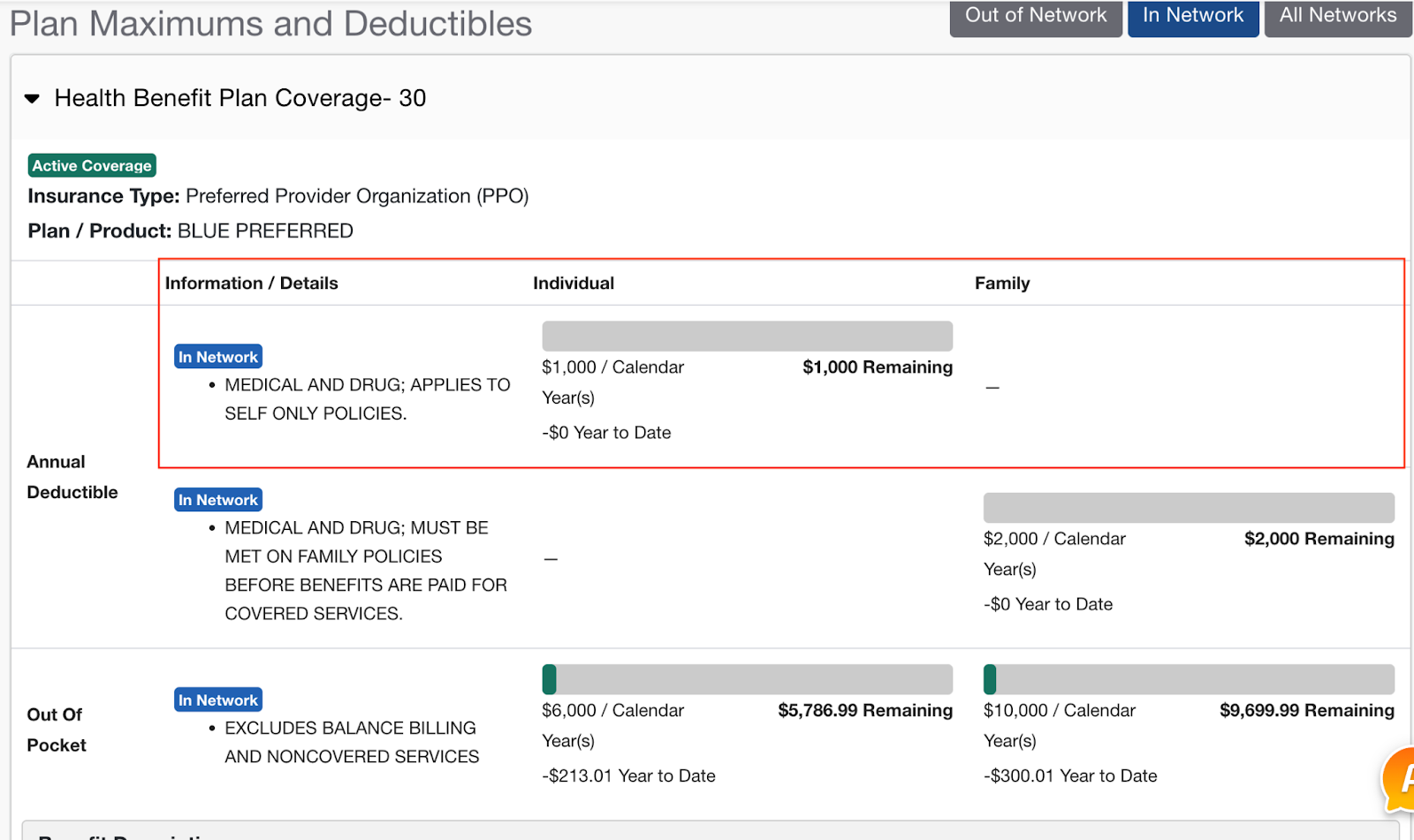
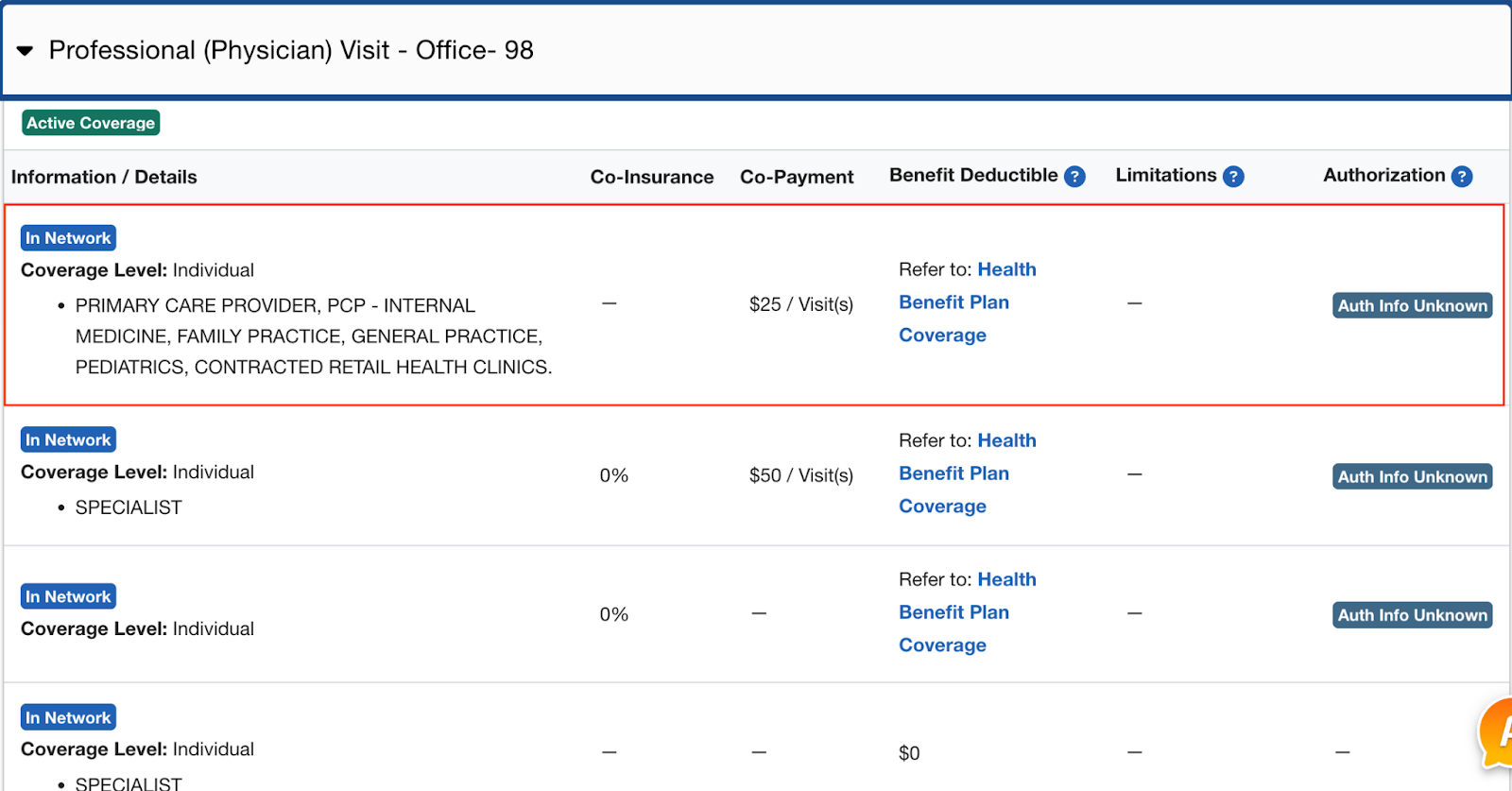
In this example, you can see that there is a deductible of 1000, and a copay of $25. In the coverage overview, you will see that it states for a PCP the copay is 25. Therefore, we will add $25 in the copay field.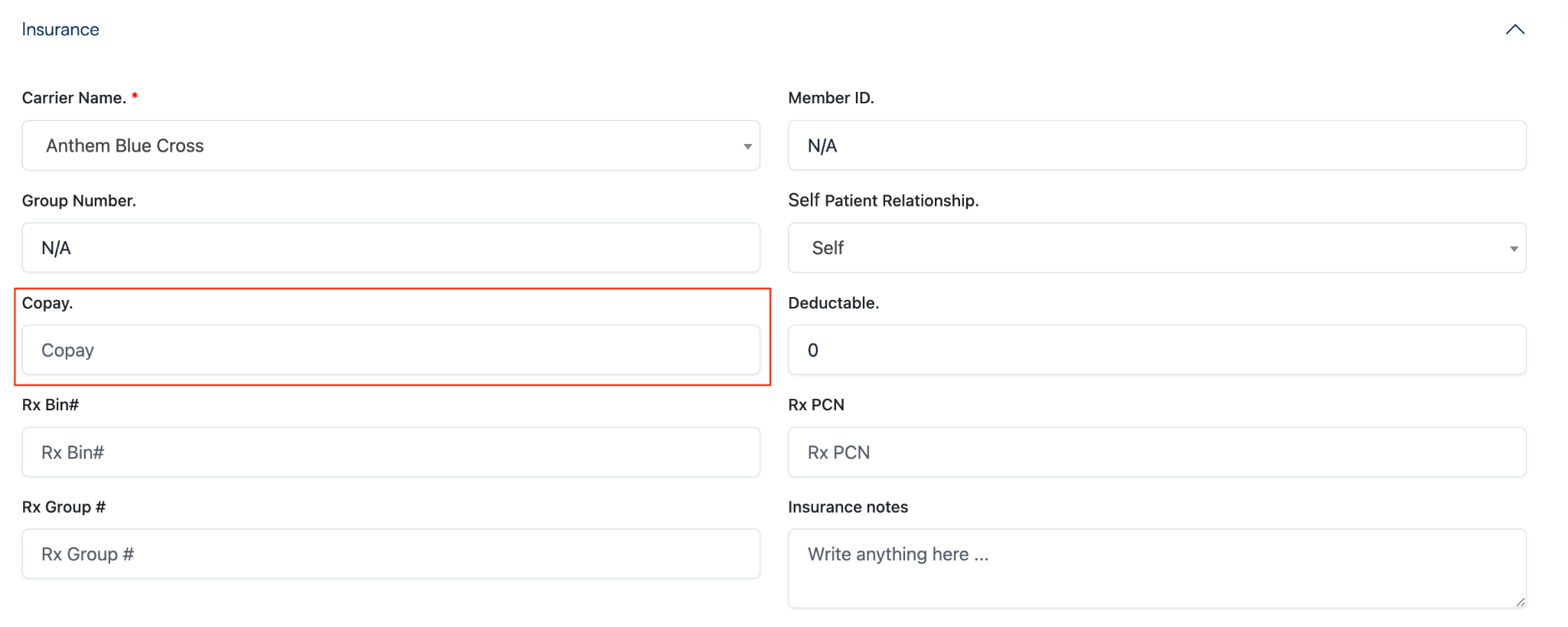
Patient has Coinsurance
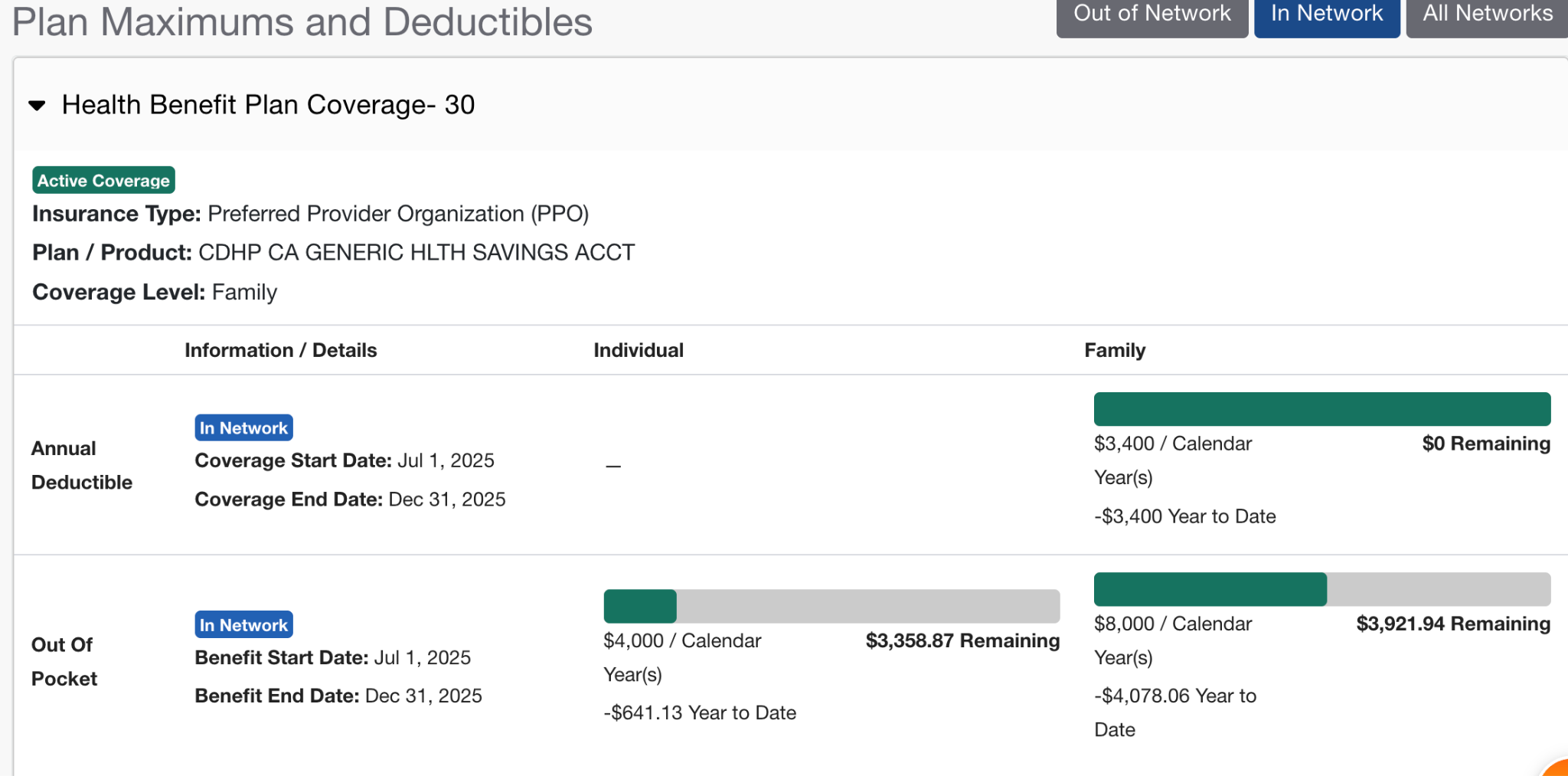
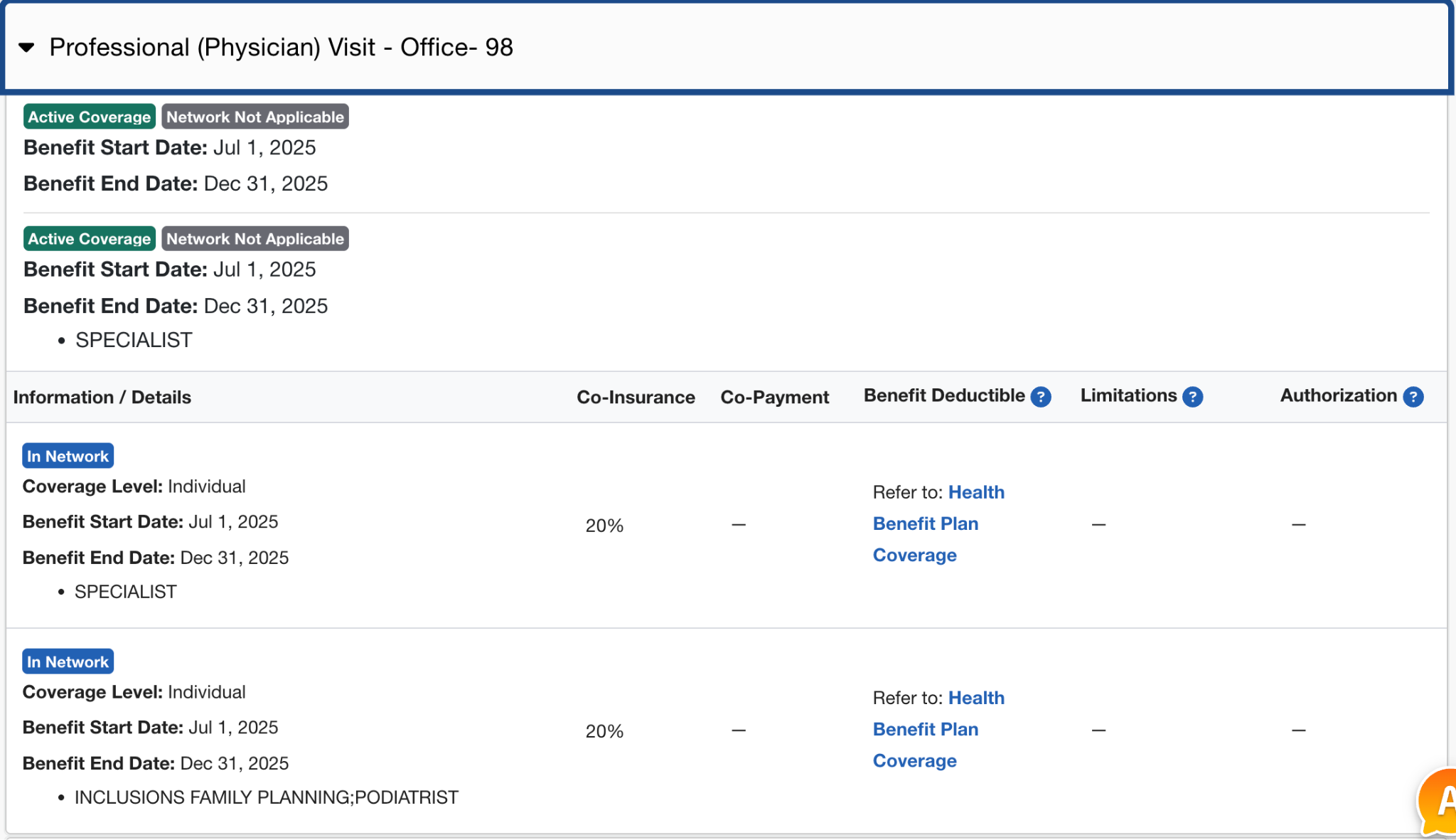
In this example, you can see that there is a deductible that has been met, and a coinsurance is 20%. Therefore, we will add 175*.20 = $35 in the copay field.
Patient has High Deductable
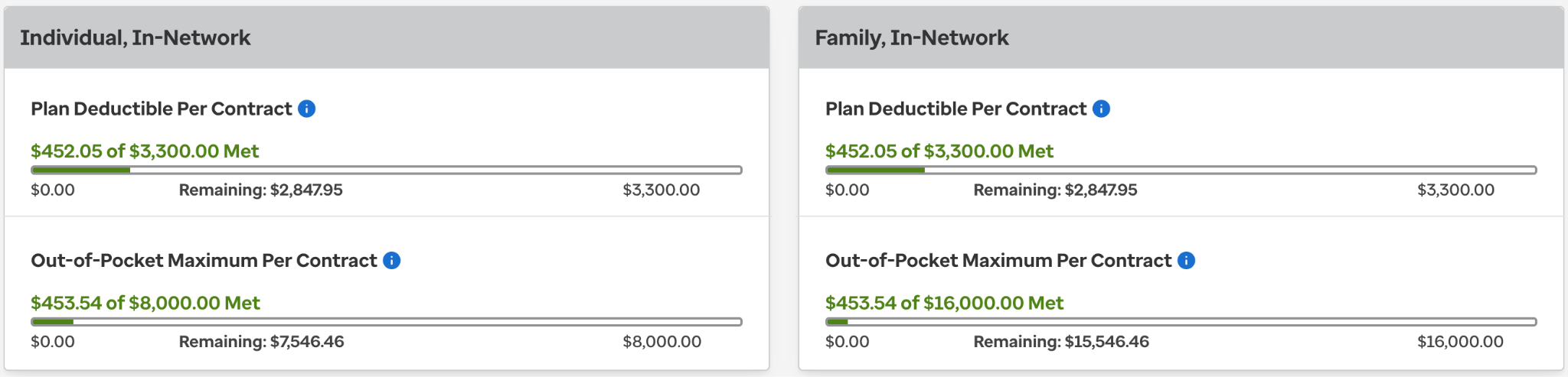
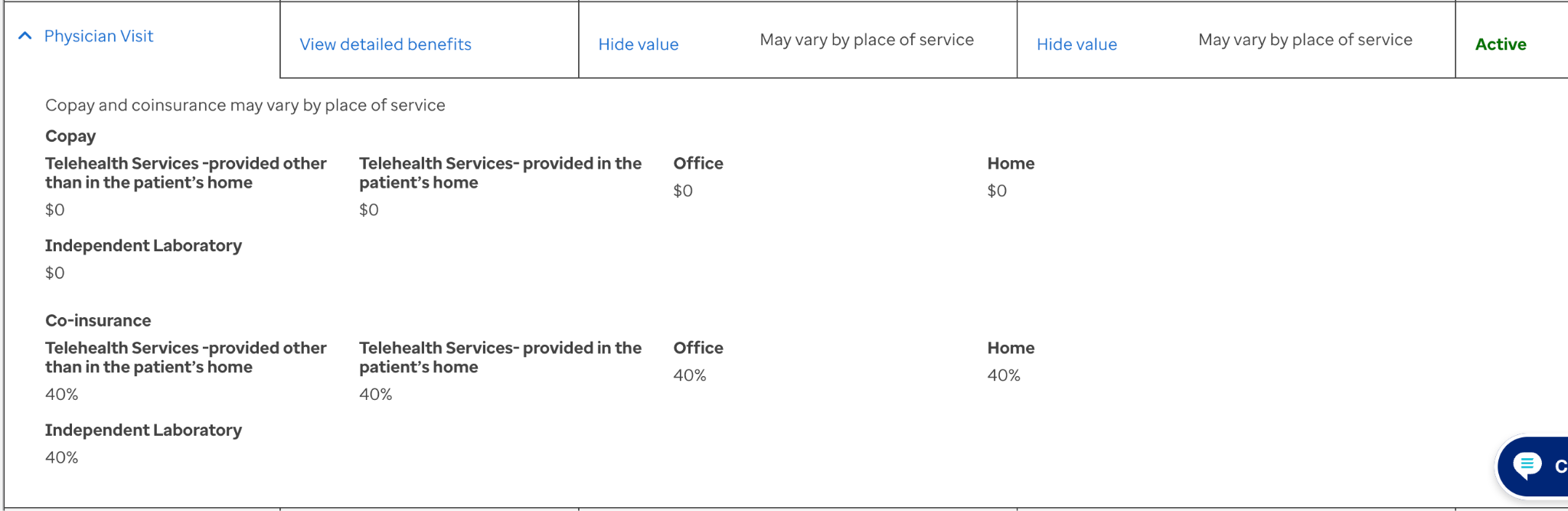
In this example, you can see that there is a deductible that has not been met, and a coinsurance is 40% (Doesn’t mean anything in this case). This means the Patient is more than likely fully responsible for the visit. We should put $20 in the copay field to collect a deposit.
Comments (0)