
Below are several key updates, adjustments, and reminders to help ensure the team stays aligned and informed. If you have any further questions, feel free to comment below.
Controlled Substance Protocols
Review the controlled substance articles. View Section here
⛔️ Strictly Prohibited Medications: The prescribing, renewing, or initiating of the following substances is strictly prohibited within this practice:
- Promethazine (Phenergan): Promethazine (Promethazine) in any form (including oral, rectal, or injectable) or combination drug is not allowed to be prescribed at BESA Health.
Follow-Up Cadence
Review the follow-up cadence protocol. View article here.
Abdominal Aortic Aneurysm (AAA) Screening
- Target Population: Men aged 65–75 who have ever smoked (defined as >/= 100 lifetime cigarettes).
New Clinical Policies
Please review all new clinical policies by clicking on the links below.
Developing a Culture of Safety
Informed Consent and Documentation of Treatment Refusal
- Termination of the Physician-Patient Relationship (Patient Discharge)
Patient Notes
In order to properly treat and care for a Patient we must first develop a relationship with them. This gets fostered during the small talk at the encounter. It occurs when the Patient realizes you are asking questions about them and not just their ailment.
When learning something about the Patient be sure to add it to the Patient note section.
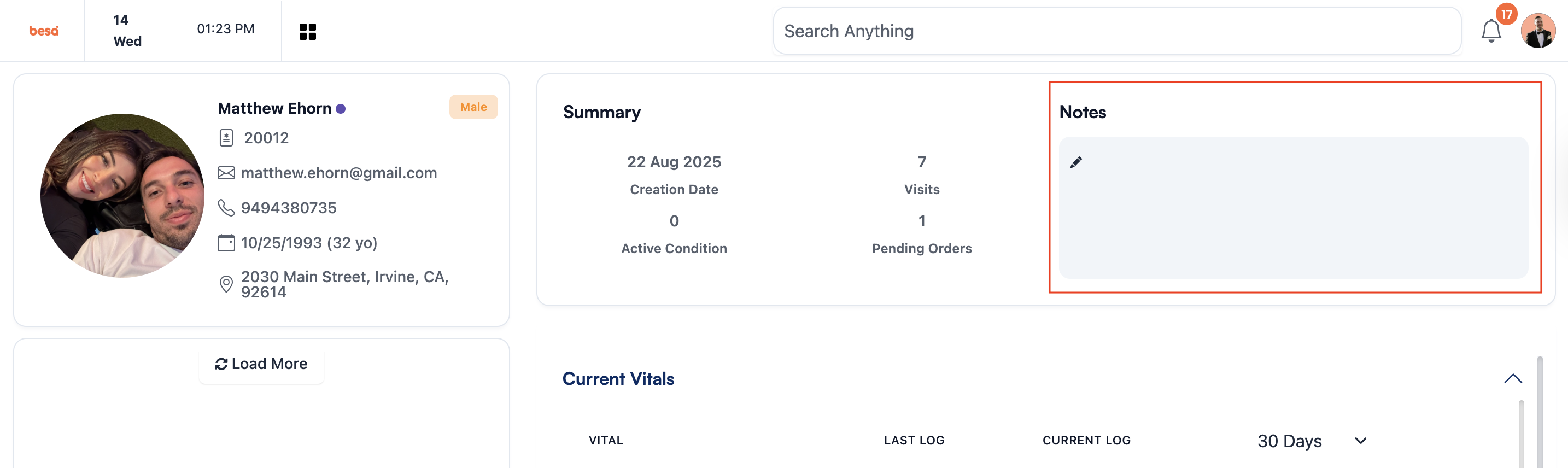
Providers should always be adding something here in the Patient notes that the team can use to relate to the Patient. One example that recently occurred was a Patient is getting married early this year. Their care manager, when responding to an inquiry, brought up the wedding month and started a secondary conversation with the Patient - further building the relationship between the Patient and their care team.
If you are not too sure what may be important to ask or to put in the Patient notes, asking if they have any trip plans or if they have traveled recently is a great one. What this does is (1) gives the Patient an opportunity to talk about a happy or eventful experience, or (2) gives the Patient the chance to say something that they are looking forward to and planning.
With something a trip planned, the support team will be able to relate with or do some research about and send some must-do itinerary items to the Patient.
Comments (0)