
The encounter is the most fundamental part of treating the Patient. This is where all the little things that we stress make an impact on the Patient. If we do everything exceptional, but have a bad encounter with the Patient, all that hard work goes out the window. When in comes to the encounter, it is lights, camera, action!
📚Resources Needed
- besa EHR
- Patient Monitoring Devices (Potentially)
🚀 Tips & Tricks
- Never begin an encounter without first doing the prep work.
- When conducting the encounter, conduct it with intention and empathy. If you do this, the Patient will notice and feel heard, important, and treated.
- Vitals will be gathered by support staff upon check-in via Apple watch.
- Dress to impress. Touch whenever appropriate. Sit next to the Patient, not in front of the Patient. When you add anything to Patient record, it should be done in front of the Patient.
- The Patient will always be more nervous then you. At the beginning of the encounter, talk a little bit about yourself. This gives some times for the Patients nerves to go down and for them to find something you both can relate with.
- Here's a rendering of how the space looks to give you a better idea as to the floor plan.

📘 Instructions
This is a step by step process using our systems. For more details, please refer to previous articles which cover a more comprehensive encounter flow.
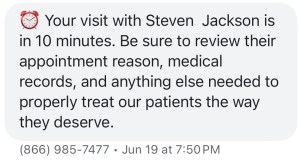
- You will receive an email and an SMS letting you know that the appointment is going to begin in 10 minutes. This is your trigger to begin the prep work.
- Login to besa EHR using your credentials.
- You can monitor the Patient status and visit status there in the EHR.
- Go into the Patient detail page to properly review the Patient records. Once proper review has been completed, Select Begin Encounter.
- After performing your initial checks, you’ll want to review the Patients vitals. These vitals are coming from when they checked-in. Upon checkin, they are handed an iPad for intake and an apple watch they will put on their wrist. We gather their vitals as they complete the intake.

If there are vitals that do not seem accurate or missing, please get these vitals when Patient enters into the exam room. This helps to facilitate trust with the provider. We will not have a standard triage area, as in a clinic environment, it only creates more steps and barriers for the Patient. - It is imperative that the support staff and providers are in constant communication with one other. This is what will ultimately determine how fluid the Patient experience will be.
- Call the Patient in the exam room by name. Since you have a photo of them, you can also walk closer to where they may be sitting and let them know you're ready to being their visit. When calling on them, be sure to smile. Always smile!
When introducing yourself, tell them something about you, something that they may need to be able to connect with. This is the dance, it is the beginning of hopefully a long lasting relationship. Remember, they will be a little nervous when they first get on. Make them feel comfortable enough to open up.
- Both of you will sit at the table in the exam room. You will be sitting next to the Patient and not in front of the Patient. You will be sitting there with the iPad out so that they can see it.
- After quick intro, always try to create some kind of connection with the Patient. Ask them some questions about them. Show them that you care about who they are.
- In case you need to get their vitals go ahead and get them now and add them into the Patient encounter.
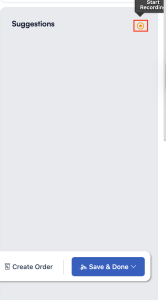
- Let them know that we record the visit to help providers such as yourself be there more for the Patient and address their concerns. Begin recording by clicking on the record button.
-
DO NOT ask them what brought them in. You already see what brought them in through the appointment details. Rather confirm with them that is why they are there, ask them to expand on it, and how you’re going to be helping them. Here’s an example:
“I see here that you’ve been having headaches daily. I am really sorry to hear that, having dealt with them myself I know how difficult it can be to get through the day. We’ll be sure to get this taken care of for you today. To begin can you please tell me a little more about what you're feeling?”
- As the Patient is speaking to you, you should give them your full attention. Nod periodically, reiterate back to them something that was said. If anything you deem is very important to note, please write it down in the canvas so no matter what you know it is recorded.
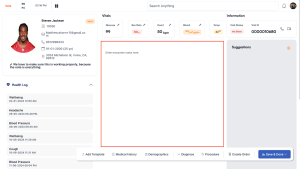
- After the Patient has told you everything they can, perform your assessment. Make sure to let them know what you would like to do and why prior to asking. Remember, nobody cares what you do, they care why you do it. Pro tip: Throughout the whole encounter, smile whenever deemed appropriate.
- If there is a diagnosis, discuss the potential diagnosis and carefully describe each one and the details regarding them. Force the Patient to be part of their visit, not just someone the visit is happening for.

Pro tip: Do not use the AI search in front of them unless you absolutely have to. This is more for when the Patient is not looking. - When you develop the plan, clearly explain it to the Patient so there is no confusion. You may even want them to say it back to you.
- If you need to create an order, do so by clicking on the Create Order tab. If you need some more details regarding the order before sending it out, just save it as a draft and make proper notes.

- Prior to finishing up the encounter, as long as everything of importance was said, stop the recording and process the audio. You will want to do this prior to reiterating anything or finishing up because depending upon the audio, it may take a few minutes to process.
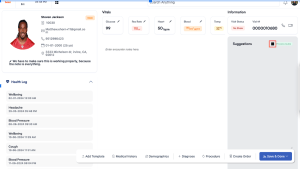
- When the scribe finishes, confirm all the information is accurate, update anything that you may need to and add it to the main Canvas.
- When finished, click Save & Done to end the visit. This will trigger the supervising physician to review the Patient encounter.

You got it! As long as you’re going into the encounter prepared and with the desire to actually treat the Patient, you will do an excellent job and the Patient will feel how much you/we care.
If you have any questions or would like more information, please reach out to support.
Comments (0)